
Urban Air Mobility Consulting Services
Urban Air Mobility Consulting supports public institutions, businesses and investors in evaluating opportunities for innovative urban and regional air transport systems.
As an independent consultant and founder of Vertiports Enterprise Ltd, I focus on the strategic, territorial and infrastructure requirements for the development of Urban Air Mobility (UAM).
My approach begins with a fundamental principle: understand the territory and its needs before proposing technological solutions.
What Is Urban Air Mobility?
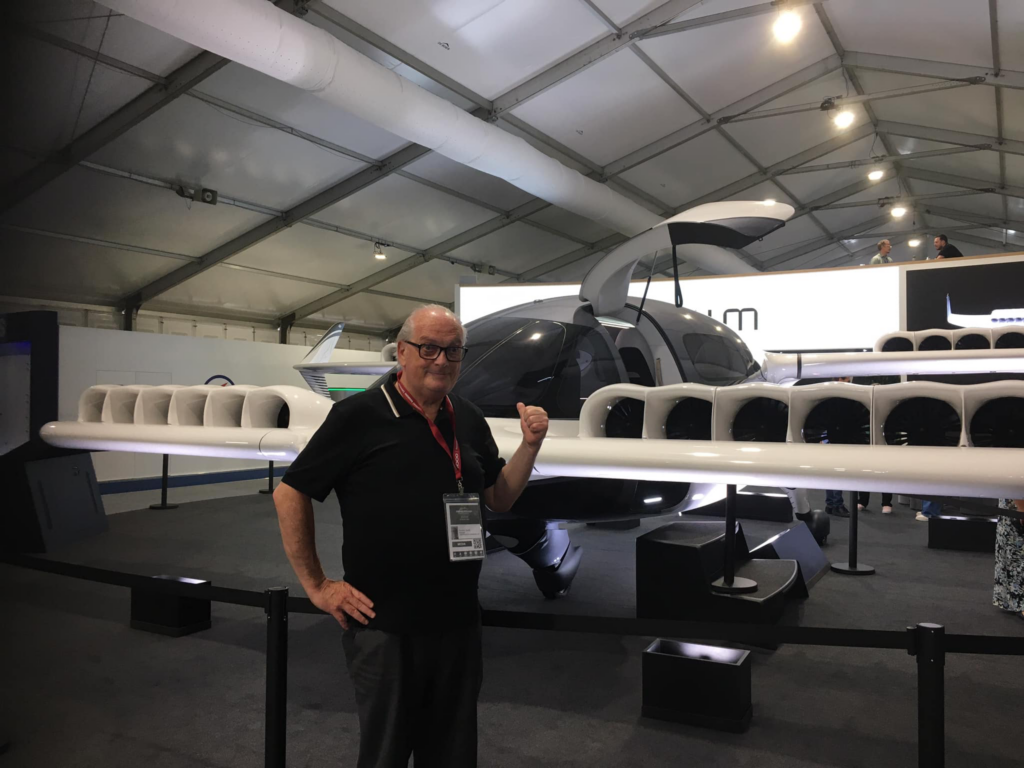
Urban Air Mobility (UAM) refers to the use of innovative aircraft, including electric vertical take-off and landing (eVTOL) aircraft, to provide passenger and cargo transport services within urban areas and between cities and surrounding territories.
Its development requires more than aircraft technology. Successful implementation depends on appropriate infrastructure, integration with existing transport networks, regulatory frameworks, operational safety and a realistic understanding of potential demand.
UAM should complement existing mobility systems, not replace them.
Urban Air Mobility Consulting — Strategic Planning & Vertiport Networks
My consulting activities focus on identifying where Urban Air Mobility could deliver measurable benefits.
Key areas include:
- Territorial assessment: Identifying potential demand, geographical constraints and opportunities.
- Vertiport network planning: Evaluating potential locations and the relationships between different infrastructure nodes.
- Intermodal integration: Assessing connections with railways, airports, ports and public transport.
- Stakeholder engagement: Supporting dialogue between institutions, operators, infrastructure providers and local communities.
- Strategic feasibility: Examining operational, economic and regulatory conditions before investment decisions.
The objective is to develop realistic mobility concepts based on evidence rather than technological expectations.
CATEM — Evidence Before Investment
CATEM (Cacelli AAM Territorial Evidence Matrix) is an evidence-based methodology developed to support the preliminary assessment of territories and potential Advanced and Urban Air Mobility networks.
It examines territorial characteristics, potential demand generators, existing infrastructure, alternative transport solutions and possible network configurations.
CATEM is designed to help identify opportunities, constraints and knowledge gaps before committing resources to more detailed feasibility studies.
Evidence Before Investment in Urban Air Mobility.
Evidence-based Urban Air Mobility planning also benefits from independent Strategic Intelligence, supporting informed decisions through research, risk assessment and analysis of emerging opportunities.
VIAVERT — An Evidence-Based Air Mobility Network Concept
VIAVERT is a strategic project for the development of integrated urban air mobility networks in selected territories within the European Union.
The initiative explores how vertiports, innovative aircraft, and existing transport infrastructure can be integrated to improve accessibility and territorial connectivity.
Based on the CATEM methodology, VIAVERT analyzes potential demand, infrastructure requirements, intermodal connections, and operational constraints before identifying possible network configurations.
Its goal is to develop a realistic, scalable, and sustainable approach to air mobility planning, supporting informed decisions prior to infrastructure investments.
VIAVERT: From Territorial Evidence to Air Mobility Networks.
Research & Publications
I’m the author of La Mobilità Aerea Urbana in Italia: Gli eVTOL ed i vertiporti per lo sviluppo di un Paese.
The book explores the opportunities and challenges associated with Urban Air Mobility in Italy, with particular attention to eVTOL aircraft, vertiport infrastructure and their potential contribution to the country’s development.
Independent Strategic Advisory
Urban Air Mobility presents opportunities, but its implementation requires careful consideration of economic sustainability, infrastructure requirements, regulatory conditions and community needs.
My role is to provide independent strategic analysis, support informed decisions and help identify where new aerial mobility solutions may offer genuine value.
The future of mobility begins with understanding the territory.